Plasma Aluminium Diecasting is a gravity die casting (GDC) manufacturer in Pune, India, producing low -
porosity, high - integrity aluminium components for automotive, hydraulic, structural and industrial
applications. Based near Chakan and Moshi, the company offers in - house GDC tooling, CNC machining and
post - casting finishing for clients across India.
Gravity die casting occupies a critical middle ground in the aluminium casting landscape - it produces
components with the mechanical properties that HPDC cannot match and the cost structure that sand casting
cannot beat. For manufacturers in Pune's automotive and hydraulic components supply chain, GDC is often
the process that enables a component to meet its structural specification without over - engineering the
design or over - investing in tooling.
Gravity Die Casting Manufacturer in Pune – Low-Porosity Aluminium Components with Superior Strength
When a component needs to be strong, dense and dimensionally accurate—but the volumes do not justify the
higher tooling investment of high-pressure die casting—Gravity Die Casting (GDC) is the process that
engineers reach for. Also known as permanent mould casting, GDC fills a precision steel mould using the
natural force of gravity, producing aluminium castings with lower porosity, better mechanical properties
and tighter metallurgical control than high-pressure methods.
Plasma Aluminium Diecasting is a specialist Gravity Die Casting manufacturer in Pune. We produce GDC
components for automotive, hydraulic, structural and industrial applications, with in-house tooling
development , CNC machining and surface treatment capabilities that deliver production-ready components
directly from our Pune facility.
Understanding the Gravity Die Casting Process
In Gravity Die Casting,
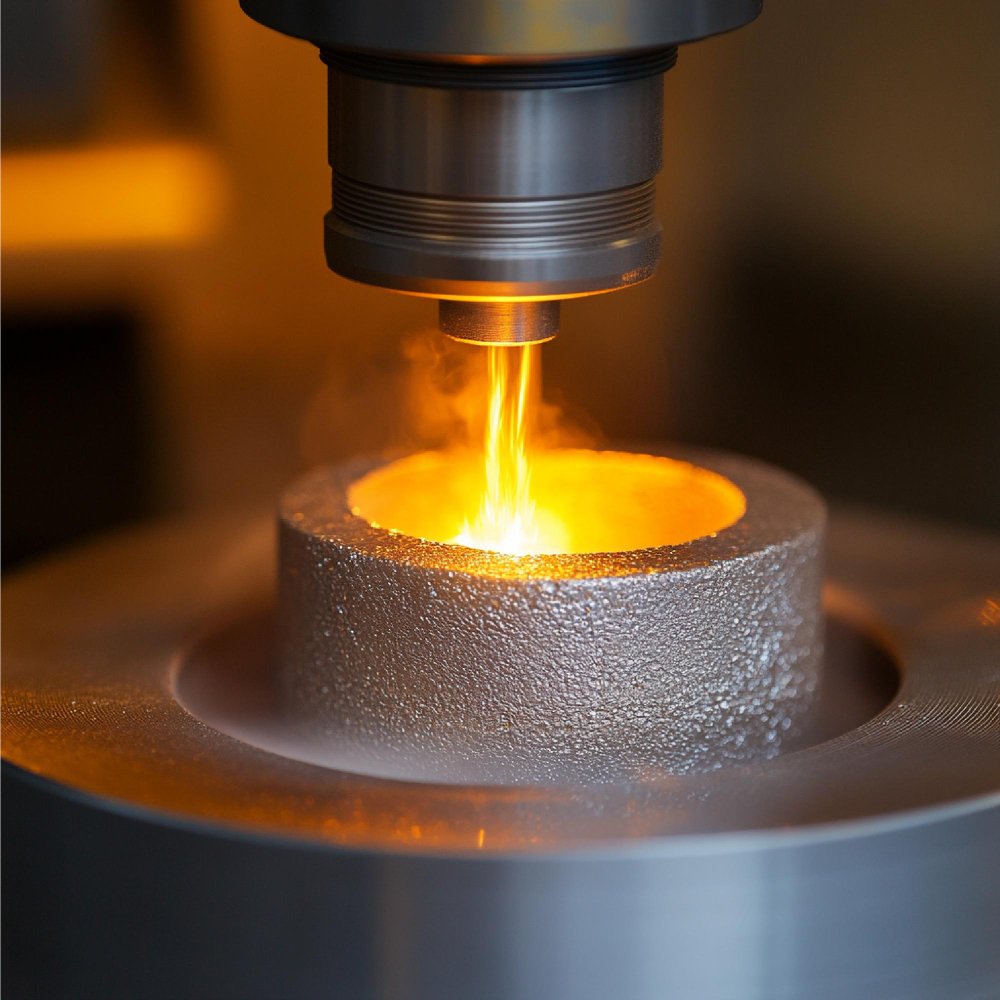
molten aluminium is poured into a preheated, precision-machined steel mould and fills it under the
influence of gravity alone. The controlled pour rate and gradual mould filling reduce turbulence in the
melt, which in turn reduces trapped gas and porosity in the solidified casting.
The key
process characteristics of GDC are:
- Lower porosity than HPDC: Reduced turbulence means
less trapped gas in the casting, producing denser, more reliable material.
- Better mechanical properties: GDC castings typically
exhibit higher tensile strength, yield strength and elongation than equivalent HPDC parts.
- Directional solidification: By controlling mould
temperature and pour rate, solidification can be directed to enhance material properties in critical
sections.
- Reusable permanent moulds: Unlike sand casting, GDC
uses permanent steel moulds that produce consistent geometry across production runs and can be used
hundreds of thousands of times.
When to
Choose GDC Over HPDC or Sand Casting
GDC
occupies an important position in the casting process spectrum alongside high pressure die casting. It is the right choice when:
- Component strength, fatigue life, or
pressure tightness requirements exceed what HPDC can reliably deliver.
- Wall thicknesses are greater than 3
mm and the geometry does not demand the ultra-thin walls that HPDC enables.
- Production volumes are in the
hundreds to low thousands per year—enough to justify permanent tooling, but not enough to amortise
HPDC tooling at a competitive per-unit cost.
- The application involves hydraulic
fluids, pressure vessels, or structural loads that make porosity a critical failure mode.
- Post-cast heat treatment (T5 or T6) is
specified to achieve higher strength levels, which GDC castings support more reliably than HPDC.
GDC
Components We Manufacture at Plasma
Automotive
& Drivetrain
- Hydraulic brake caliper bodies and master cylinder housings
- Suspension arm brackets and mounting components
- Differential and gearbox cover plates
- Engine mounting brackets with high fatigue-life requirements
Hydraulics
& Pneumatics
- Hydraulic valve blocks and manifold bodies
- Pump housings for medium-pressure hydraulic systems
- Cylinder heads for pneumatic actuators
Industrial
& Structural
- Structural machine frames and base plates
- Pump and compressor casings for industrial fluid systems
- Heat exchanger end caps and flow distribution blocks
Our GDC
Process at Plasma
Every
Gravity Die Cast component at Plasma goes through a disciplined manufacturing sequence:
- Component DFM Review: Our engineers assess draft
angles, wall uniformity, feeder location and vent design to optimise the gravity fill and
solidification pattern.
- In-House Mould Fabrication: We design and machine GDC
tooling in-house, with precise control over mould temperature management and parting line geometry.
- Mould Pre-heating and Coating: The mould is preheated
to the specified temperature and coated with release agent to ensure consistent fill and release
behaviour.
- Controlled Pour and Fill: Molten aluminium is poured
at the specified temperature and rate to minimise turbulence and ensure complete fill without misrun.
- Controlled Solidification: Temperature and cooling
rate are managed to direct solidification and optimise material properties.
- Knock-out and Fettling: The casting is removed from
the mould, gates and runners are removed and the component is fettled to the required surface
condition.
- Post-Cast Processing: CNC machining, heat treatment
(if specified) and surface coating as required.
- Inspection and Dispatch: Full dimensional and visual
inspection before packing and delivery.
Alloys
Used in Gravity Die Casting at Plasma
Our
GDC process works with several aluminium alloy families that are particularly well suited to this
process:
- LM6 (Al-Si 12%): Excellent fluidity and corrosion
resistance. A good choice for thin-walled GDC components and marine or chemical environment
applications.
- LM25 (Al-Si7Mg / A356): The most widely used GDC
alloy for structural applications. Responds well to T6 heat treatment, achieving tensile strengths
of 280 MPa and above.
- LM24 / ADC12: Used where moderate strength and good
castability are the priority, at lower alloy cost.
Alloy
selection is confirmed during the design and DFM review based on your mechanical property requirements,
heat treatment specification and applicable standards.
Quality
in GDC Production
At
Plasma, GDC quality management includes:
- Incoming alloy chemistry verification against
specification
- Mould temperature monitoring throughout the production run
- First-article dimensional inspection with full report
- Visual inspection for surface defects: cold shuts,
porosity, shrinkage, mis-run
- Where specified: X-ray inspection, pressure testing, or
CMM measurement reports
- Heat treatment process monitoring (furnace temperature, soak
time, quench rate) where T6 or T5 treatment is specified
Gravity
Die Casting in Pune, Chakan & Moshi
Plasma Aluminium
Diecasting's Pune facility is within direct reach of Chakan MIDC, Moshi MIDC and Chimbli—the clusters
where most of the region's hydraulic, automotive structural and industrial component manufacturers are
concentrated. Our proximity gives clients the responsiveness and direct engineering access that makes
complex GDC projects—which often involve several design iterations before production is
finalised—significantly easier to manage.
If you need a Gravity Die Casting
manufacturer in Pune who can take on complex aluminium structural components and deliver them with the
dimensional accuracy and material integrity your application demands, contact Plasma Aluminium
Diecasting to discuss your requirement.