Plasma Aluminium Diecasting delivers aluminium high pressure diecasting (HPDC) services in
Pune, India, producing precision components for the automotive, EV, electrical, aerospace
and industrial sectors. With in - house tooling, CNC machining and powder coating at its
Pune facility, Plasma serves clients across Chakan, Moshi and the broader Indian market.
India's transition to electric vehicles is creating a specific and growing demand category
for aluminium HPDC in Pune. EV platforms require aluminium enclosures for batteries, motors
and power electronics that are lighter, more thermally managed and dimensionally tighter
than their ICE - era equivalents. Pune's OEM and Tier - 1 cluster is at the centre of this
transition - and a precision HPDC manufacturer with local presence and process depth is a
supply chain priority, not a commodity choice.
Aluminium High Pressure Die Casting Pune – High-Volume Precision Components for Automotive,
Electronics & Industrial
Aluminium High Pressure Diecasting (HPDC) is the manufacturing process that defines modern
automotive, electrical and industrial component production. Its combination of dimensional
accuracy, production speed and design flexibility - achieved by injecting molten aluminium
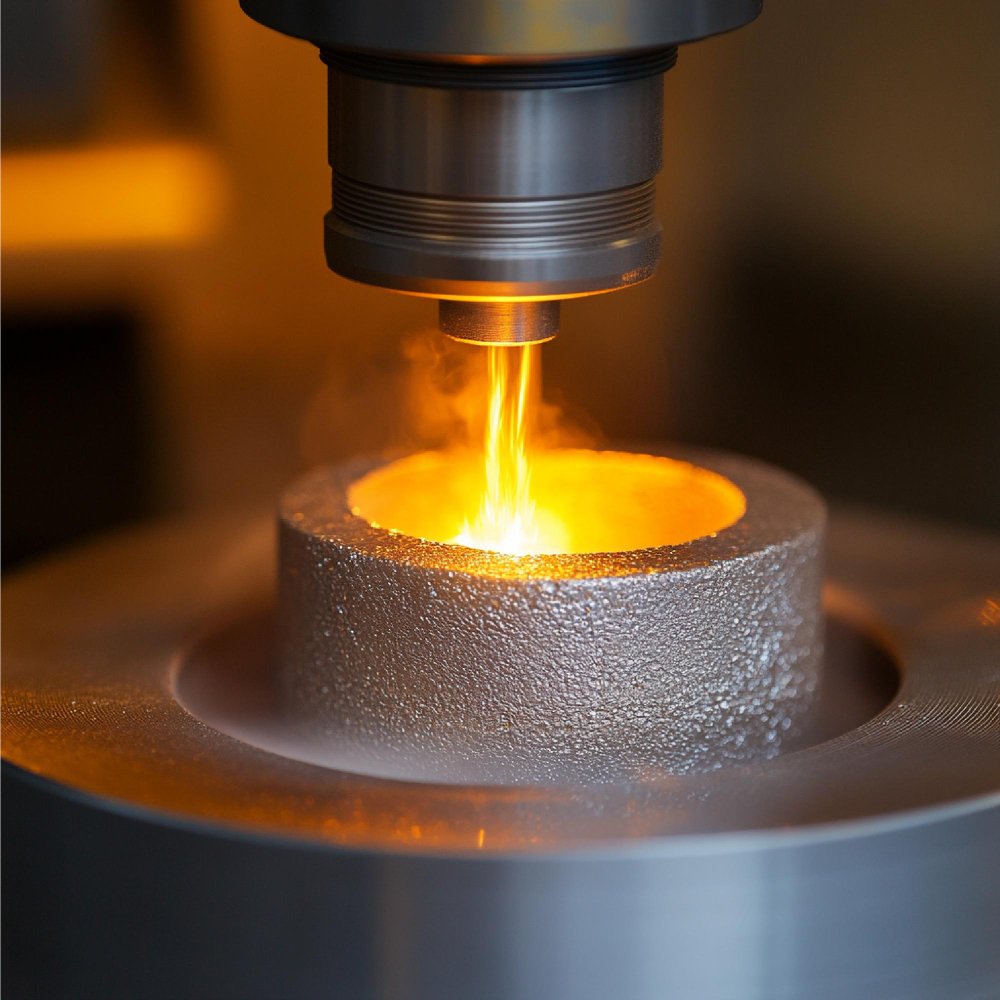
into a precision steel die at pressures between 1,000 and 1,500 bar - makes it the preferred
process for manufacturers who need thousands or hundreds of thousands of identical,
precision - engineered components.
Plasma Aluminium Diecasting is an aluminium high pressure diecasting manufacturer based in
Pune. Our facility serves clients across Chakan MIDC, Moshi MIDC, Chimbli and nationally
with HPDC components that meet the dimensional, surface and metallurgical standards of
automotive, aerospace, electrical and industrial supply chains.
What Makes Aluminium the Material of Choice for HPDC?
Aluminium's properties align almost perfectly with what high - pressure die casting demands - and what end - use applications require. Key reasons aluminium dominates HPDC production include:
- Low density: At approximately 2.7 g/cm³, aluminium is roughly one - third the weight of steel, enabling significant component weight reduction in automotive and aerospace applications.
- High strength - to - weight ratio: Aluminium alloys used in HPDC achieve tensile strengths of 200 - 320 MPa, competitive with many steel applications at a fraction of the weight.
- Excellent castability: Aluminium alloys, particularly silicon - bearing grades like ADC12 and A380, have good fluidity and solidification behaviour suited to the HPDC process.
- Thermal and electrical conductivity: Critical for heat sinks, motor housings and electrical enclosures where heat management is a design requirement.
- Corrosion resistance: Aluminium's natural oxide layer provides inherent corrosion resistance, reducing finishing requirements for many applications.
- Recyclability: Aluminium is 100% recyclable without degradation of properties - an increasingly important factor in automotive and electronics supply chains with sustainability mandates.
HPDC Applications We Serve at Plasma
Automotive and EV Sector
- Engine and cylinder head covers, oil pan components and timing chain covers.
- Transmission housings and shift mechanism covers.
- EV motor housings, inverter enclosures and onboard charger housings.
- Battery bracket structures and cooling plate sub - components.
- Structural body - in - white brackets, A - pillar reinforcements and door hinge mounting components.
- ADAS and camera sensor housings and mounting brackets.
Electrical and Electronics
- Motor frames and end shields for industrial and commercial motors.
- Switchgear and circuit breaker housings.
- Heat sinks for power electronics, LED luminaires and inverter systems.
- Junction boxes and outdoor electrical enclosures (IP - rated die cast bodies).
Industrial and Infrastructure
- Pneumatic and hydraulic actuator bodies.
- Machine enclosures and instrument housings.
- Pump and compressor impeller housings.
- Bracket and mounting hardware for industrial machinery.
The Plasma HPDC Production Process
- Design for Manufacturability (DFM): We review your drawing for draft angles, wall thickness uniformity, gate location feasibility and features that will require post - machining. Issues are flagged before tooling starts.
- In - House Tool Design and Fabrication: Gate design, runner layout, venting, ejection and cooling circuits are designed by our tooling team and fabricated on our in - house machining centres from H13 hot work steel.
- Process Parameter Setting: Shot speed, injection pressure, intensification pressure and die temperature are set and locked for each component during first - trial setup.
- First - Article Inspection: First production samples are fully dimensioned against the drawing, with a formal first - article inspection report provided.
- Production Monitoring: Shot parameters are monitored throughout the production run. Periodic dimensional checks confirm ongoing conformance.
- Post - Casting Operations: Degating, shot blasting or fettling and transfer to CNC machining and/or powder coating as specified.
- Final Inspection and Despatch: Visual and dimensional check, component identification and packing to client - specified packaging requirements.
Alloys Available for Aluminium HPDC at Plasma
- ADC12 (equivalent to LM24): The most widely used HPDC alloy globally. Excellent castability, good strength and reliable surface quality. Standard for automotive and general industrial HPDC components.
- A380: Good corrosion resistance, dimensional stability and mechanical properties. Frequently specified for electrical housings and enclosures.
- ADC10 / 383: Higher silicon content than A380. Improved castability and reduced hot - tearing tendency; used for complex thin - walled castings.
We work to the alloy specified in your drawing or purchase order and can advise on the most appropriate alloy for your application if not yet specified.
HPDC Advantages Over Alternative Manufacturing Processes
For high - volume aluminium components, HPDC consistently outperforms alternative processes on the metrics that matter most to production manufacturers:
vs Sand Casting: HPDC provides better dimensional accuracy, smoother surfaces, thinner walls and much faster cycle times at production volumes. Sand casting is better suited to very low volumes or very large components.
vs Forging: HPDC can produce far more complex geometries with integrated features, at lower per - unit cost for similar volumes. Forgings are preferred where maximum fatigue strength is required.
vs Plastic injection moulding: Aluminium HPDC is superior in structural strength, thermal management, EMI shielding and dimensional stability under temperature.
Serving the Aluminium HPDC Market from Pune
Plasma Aluminium Diecasting's Pune - based HPDC facility serves the full spectrum of precision aluminium component buyers across Chakan MIDC, Moshi MIDC, Chimbli and India. Whether your requirement is for automotive structural parts, EV components, electrical housings, or industrial hardware, our HPDC manufacturing capability and integrated in - house services make us a genuinely complete solution.
Contact our team to discuss your aluminium high pressure diecasting requirement in Pune. We will review your drawings, recommend the optimal process and provide a competitive quotation.